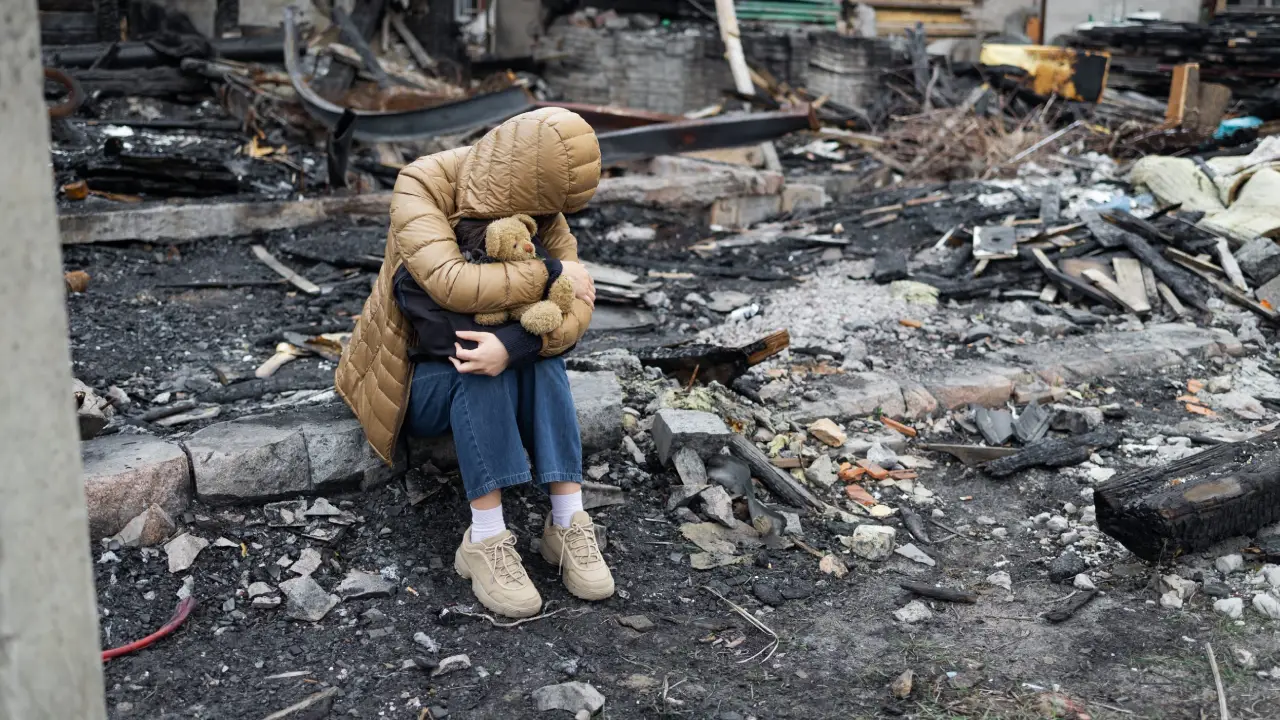

Survivor guilt describes guilt about remaining safe, recovering or retaining opportunities when other people have been harmed, lost something significant or died. It can occur after disaster, war, accident, assault, serious illness and a public health crisis. It is not limited to situations involving life and death. Someone who keeps their job during redundancies, gains opportunities unavailable to relatives or recovers from an illness more quickly than peers may experience a similar emotional conflict.
A person may ask, “Why me?”, “I should have been hurt instead” or “I should have done more.” Even when they had little or no control over the outcome, they may evaluate it as proof of a personal moral failure. Safety, rest and ordinary pleasure can begin to feel disloyal rather than relieving.
Survivor guilt is not a diagnosis by itself. It can appear within grief or a broader response to trauma. For some people it eases as the event is processed. For others it becomes persistent and affects sleep, relationships, work, health and the ability to participate in life.
When can survivor guilt occur?
Disasters create dramatically unequal outcomes within the same building, neighbourhood or community. One person may escape physically unharmed while relatives are injured or homes are destroyed. The difference can make personal safety feel like an undeserved privilege. From the perspective of disaster psychology, guilt may be one attempt to make sense of an event that feels random and profoundly unfair.
After an accident, drivers, passengers, colleagues and witnesses may become stuck on the question, “Could I have changed the outcome if I had acted differently?” A person whose medical treatment succeeds may suppress relief after another patient dies. Healthcare workers and rescuers may focus on the one person they could not reach even after helping many others.
A less obvious form can develop at work. Someone who keeps a job during mass redundancies may feel relief and guilt simultaneously. A person who migrates or improves their financial circumstances may feel indebted to relatives who remain under pressure. The shared pattern is difficulty allowing oneself to live when another person has lost something.
What are the signs of survivor guilt?
Survivor guilt often includes repetitive counterfactual thoughts. The person mentally replays the event, searches for an action that might have produced a different ending and judges their earlier self as if they possessed information that became available only afterwards. “If only” thinking changes from an effort to understand into a form of self-punishment.
Emotional signs may include sadness, shame, anxiety, anger, emptiness and renewed guilt whenever relief appears. A positive experience can prompt the thought, “I have no right to enjoy this.” The person may withdraw from celebrations, close relationships or activities that previously brought meaning.
Physical and behavioural effects can include disrupted sleep, appetite changes, fatigue, tension and startling easily. Someone may avoid places, people or conversations linked to the event. Others respond by working constantly, helping without limits, giving away resources they need or taking unnecessary risks.
Helping other people can be deeply meaningful. It becomes concerning when service is the only permitted form of self-punishment. If rest produces intolerable guilt, support is refused or personal safety is repeatedly sacrificed, the role guilt is playing deserves attention.
Why does the mind create personal responsibility?
The mind struggles with chance, uncertainty and injustice. “It was my fault” is painful, but it can feel more orderly than accepting that no one could fully control the outcome. By assigning responsibility to the self, a person may preserve a sense that the world is predictable: if the error was mine, perhaps perfect behaviour can prevent every future loss.
Hindsight bias also contributes. Because the outcome is now known, warning signs can appear more obvious than they were at the time. During a crisis, information is incomplete, time is limited and the nervous system is under pressure. Judging the past with present knowledge often exaggerates how much control was actually available.
Family and cultural beliefs can strengthen the pattern. Messages such as “You must always put others first”, “Strong people protect everyone” or “Building a good life away from the family is selfish” can create responsibility beyond human limits. When love and limitless responsibility become confused, every loss may feel like a personal failure.
How is guilt different from genuine responsibility?
Feeling guilty does not prove that a person is responsible. A fair assessment considers what the person knew at the time, the choices genuinely available, the safety conditions and their actual influence. “The outcome was terrible” and “I caused the outcome” are different statements.
From the perspective of the psychology of guilt, guilt can sometimes guide useful repair after a harmful action. If someone genuinely contributed to harm, taking responsibility, apologising and making proportionate amends may matter. Endless punishment for an event outside one’s control does not restore the loss or create justice.
Several questions may help: What information did I have then? What realistic options existed? How would I judge someone I loved in the same circumstances? If I hold some responsibility, what limited and concrete repair is possible? If I did not control the outcome, what grief or fear might the guilt be covering?
Responsibility can also be shared. Systems, organisations and multiple decisions may contribute to an outcome. A person can acknowledge their part without absorbing every failure around them. Accurate responsibility is specific; traumatic guilt tends to be global and limitless.
Survivor guilt and grief
Guilt can function as a shield against emotions that feel even more unbearable. Focusing on “It was my fault” may postpone contact with longing, helplessness and the irreversible nature of loss. Challenging the logic of guilt is therefore not always sufficient; the grief beneath it also needs safe expression.
The loss and grieving process does not have to progress through fixed stages. A person can maintain a bond with someone who died while continuing to live. Laughing, working, forming relationships and making plans do not erase the loss. Ongoing life does not reduce the value of the person who is gone.
Memorial rituals can help some people. Writing a letter, supporting a cause the person valued, marking a significant date or preserving shared stories allows the bond to continue in a different form. A useful ritual creates meaning and connection rather than requiring permanent self-denial.
Grief may also involve anger at institutions, circumstances, other people or the person who died. These reactions can coexist with love. Treating every difficult feeling as moral failure increases shame and can prevent honest mourning.
How can survivor guilt be managed?
Name the feeling accurately
There is an important difference between “I feel guilty” and “I am guilty.” The first identifies an emotional state; the second declares a proven judgement. Naming the emotion creates room to examine whether it reflects actual responsibility.
Do not evaluate the past using current knowledge
Write down what you knew at the time, the pressure you faced and the resources available. Place information learned later in a separate column. This distinction can reduce the tendency to judge a past decision with the clarity created by hindsight.
Notice the double standard
Ask whether you would apply the same standard to someone you care about. If you would tell another person, “You did what you could,” while demanding perfection from yourself, guilt may be driven more by trauma and grief than objective responsibility.
Allow small experiences of positive emotion
Pleasure and grief do not cancel one another. Enjoying a meal, walk or conversation is not betrayal. Positive emotion may initially trigger guilt, so begin with small and safe experiences. Reconnection with life can grow alongside remembrance.
Do not turn helping into punishment
Solidarity can be healing when it reflects personal values. Working without sleep, giving away everything you need or repeatedly entering unsafe situations does not repair the past. Define the time, scope and boundaries of helping so that it remains sustainable.
Share the story with someone trustworthy
Guilt can intensify in secrecy. Speaking with a trusted person or professional may bring a more balanced view of how much control was available. A listener may help most by understanding the meaning of the guilt before immediately insisting that there is nothing to feel guilty about.
Support physical recovery
Sleep, nourishment, movement and healthcare are not separate from emotional processing. Severe fatigue reduces cognitive flexibility and can make self-accusing thoughts more convincing. Basic care does not disrespect the loss; it protects the capacity to live with it.
Build meaning without forcing a lesson
Some people eventually create meaning through community work, relationships, advocacy or changed priorities. Meaning cannot be demanded on a schedule. A devastating event does not need to be described as a gift or necessary lesson in order for life to become meaningful again.
How can friends and family help?
Saying “That is ridiculous; it was not your fault” may be well intended but can make the conversation feel closed. Try asking, “What do you feel responsible for?” or “What was actually within your control at the time?” The goal is not to agree with inaccurate guilt but to understand the story supporting it.
Do not pressure the person to cheer up or return immediately to their previous routine. At the same time, avoid romanticising behaviour that repeatedly punishes the self. Bringing food, accompanying the person to practical appointments, maintaining brief regular contact and helping them find professional care are concrete forms of support.
Respect cultural preferences around remembrance, conversation and privacy. Some people want to speak in detail; others value quiet company. Good support follows the person’s pace while taking serious impairment and safety concerns seriously.
Avoid using the loss to impose a purpose, such as telling the person they survived for a particular reason. This can create another impossible responsibility. It is more respectful to allow meaning to emerge from the survivor’s own values and choices.
When should professional support be considered?
Professional help may be useful when guilt remains intense for several weeks, the person withdraws from daily life, cannot sleep or work, or refuses every positive experience. Intrusive memories, strong avoidance, hypervigilance, depression and increased alcohol or substance use are additional reasons for assessment.
Urgent support is required if someone says they do not deserve to live, deliberately places themselves in danger or has thoughts of self-harm. They should not be left alone, and local emergency medical services should be contacted.
Therapy can help distinguish genuine responsibility from trauma-driven guilt, support mourning and develop a more balanced meaning that permits continued life. Healing is not forgetting. Protecting one’s own life does not diminish the importance of those who were harmed or lost.